What This Document Actually Does
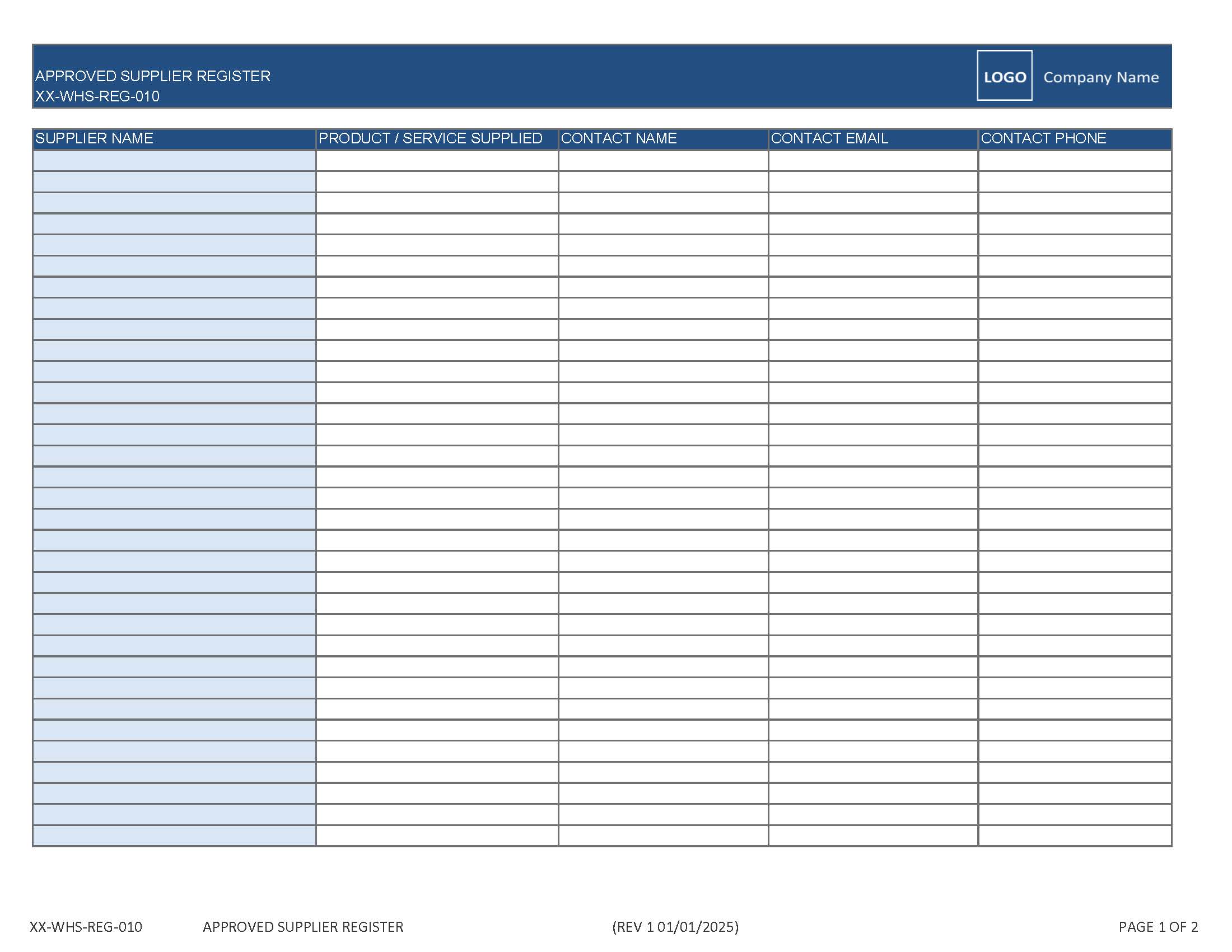
An Approved Supplier Safety Data Sheet (SDS) Register is a controlled list of hazardous chemicals used in the workplace, linked to their current Safety Data Sheets and approved suppliers.
It does more than store PDFs. It ensures that every hazardous chemical brought onto site:
Has an up-to-date SDS
Has been assessed for risk before approval
Comes from an approved supplier
Is suitable for the intended task
Is captured in the hazardous chemicals register
In practical terms, this document controls chemical entry into the workplace. It prevents unauthorised products being purchased and used without proper review.
The register typically records:
Product name and manufacturer
Approved supplier details
Current SDS issue date
Location of use or storage
Risk assessment status
Review date
Without a controlled register, chemicals can appear on site without hazard assessment, incompatible substances can be stored together, and workers may rely on outdated SDS information.
Where It Fits Inside a WHS Management System
The Approved Supplier SDS Register sits within the hazardous chemicals management framework of the WHS management system.
It connects with:
From a governance perspective, it supports compliance with WHS Regulations requiring a current register of hazardous chemicals and accessible Safety Data Sheets.
It also supports officer due diligence by demonstrating that chemical risks are identified and assessed before use, rather than after an incident.
The register forms part of the documented evidence that chemical management is systematic and controlled.
How It’s Used in Day-to-Day Operations
This register is used by:
Procurement teams verifying approved products
Supervisors checking chemical approvals before use
Safety managers conducting chemical risk assessments
Stores personnel controlling stock
Contract managers reviewing contractor-supplied chemicals
It is applied when:
A new chemical is proposed for purchase
A supplier changes formulation
An SDS is updated
Chemical storage areas are audited
Emergency planning is reviewed
Operationally, it supports:
Ensuring current SDS documents are accessible to workers
Confirming hazardous chemicals are included in the site register
Reviewing compatibility for storage
Planning spill response controls
Identifying required PPE and training
It also prevents duplicate or unnecessary chemicals being introduced when safer alternatives already exist.
If chemicals are discovered on site that are not on the register, the control system has failed.
What Regulators Expect to See
SafeWork inspectors commonly request the hazardous chemicals register and associated SDS during inspections.
They expect to see:
A current and accurate register
SDS documents issued within the last five years
Consistency between chemicals physically on site and those listed
Clear identification of storage locations
Evidence that risks have been assessed
Red flags include:
Expired SDS documents
Chemicals on site not listed in the register
Unlabelled decanted containers
No evidence of risk assessment
Workers unable to access SDS information
Inspectors assess whether the register is actively maintained or merely created once and forgotten.
A credible system shows alignment between procurement, storage, training and emergency planning.
Common Mistakes Australian Businesses Make
Keeping SDS folders but not maintaining a formal register.
Failing to update SDS documents within required timeframes.
Allowing workers to bring in chemicals without approval.
Listing chemicals without recording storage location or review dates.
Not removing obsolete products from the register.
Relying solely on supplier websites without documenting internal approval.
These weaknesses are often identified during regulator inspections or following chemical incidents.
What “Good” Looks Like in Practice
A well-functioning Approved Supplier SDS Register:
Clearly defines approval criteria for new chemicals
Requires SDS review before purchase
Records SDS issue dates and review cycles
Links each product to a documented risk assessment
Identifies approved suppliers only
It is supported by:
Centralised digital or controlled hard-copy access
Routine audits of chemical storage areas
Procurement controls preventing unauthorised purchase
Removal of discontinued chemicals from active lists
Training ensuring workers know how to access SDS information
Chemical management is integrated into site induction and emergency response planning. Supervisors verify that only approved chemicals are used in their areas.
The register is actively reviewed, not just stored.
When This Document Becomes Critical
This register becomes critical in:
Construction sites using solvents, fuels and sealants
Manufacturing operations handling hazardous substances
Utilities and maintenance operations involving cleaning chemicals
Principal contractor environments with multiple subcontractors
Government projects with strict compliance reporting
It becomes central following:
Chemical spills or exposure incidents
Regulator inspections focused on hazardous chemicals
Workers compensation claims linked to chemical exposure
Emergency events requiring SDS information
Environmental contamination incidents
During investigations, regulators will examine whether the chemical was approved, whether an up-to-date SDS was available, and whether risks were assessed before use.
Articles & Further Reading